

Is Personalization Possible Without Creeping Out Customers?
Striking the balance between relevance and privacy without losing the human touch.
Personalization: A Blessing—or a Bit Much?
Personalization is the holy grail of marketing—or so we’ve been told. “Deliver the right message, to the right person, at the right time.” It sounds perfect in theory. But in practice, when does personalization cross the line from being helpful to just plain weird?
Think about it. You’d probably be flattered if a close friend remembered your favorite coffee order. But if a brand seemed to know your coffee order, bedtime routine, and next vacation destination—things might feel… unsettling. Kind of like a stranger who somehow knows your dog’s name—helpful? Maybe. Creepy? Definitely.
Marketers are walking a thinner line every day between helpful and invasive. Let’s explore the good, the bad, and how to stay on the right side of that line.
The Good: When Personalization Works
At its best, personalization feels like a warm, knowing gesture from an old friend. A Spotify playlist tailored to your taste? Delightful. A Netflix recommendation that actually hits? Impressive.
These moments feel like a service, not an intrusion. They’re the payoff of thoughtful data use—brands meeting customer needs without overstepping boundaries. When personalization works, it feels magical, like a thoughtful nudge, not a surveillance tactic.
The Bad: When Personalization Feels Creepy
And then there’s the other side. Ever mentioned something in conversation, only to see ads for it haunting you across every platform? It doesn’t feel like personalization—it feels like surveillance. It’s less “helpful concierge” and more “we’re listening.”
Remember the infamous story of Target predicting a pregnancy before a teen’s family knew? Whether true or not, it’s a reminder of how easily algorithms can veer into uncomfortable territory.
Personalization is like dating: charming when done right, but one misstep and you’re the weirdo who knows their date’s favorite childhood pet without being told. When brands get too personal too quickly, it’s less about connection and more about raising eyebrows.
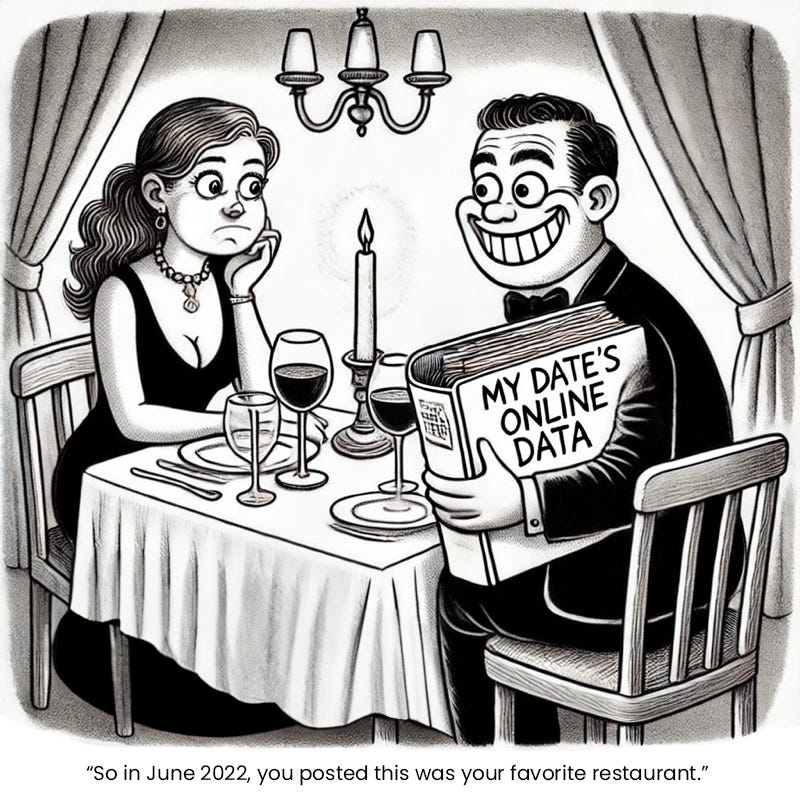
And let’s not forget the uncanny valley of AI-driven personalization—where chatbots or recommendations almost feel human but miss the mark. It’s like a wax figure that’s just off enough to be unsettling. When brands miss the nuance, they risk eroding trust instead of building it.
How to Do Better: Personalization Without the Creep Factor
To personalize effectively without crossing the line, use the CLEAR framework. CLEAR stands for:
C: Context and Timing Matter
L: Less Is More
E: Empower Your Audience
A: Adaptability Is Key
R: Respect Privacy
The CLEAR framework balances practicality with ethics, ensuring your personalization strategies are impactful and customer-friendly:
C: Context and Timing Matter
Personalization only works when it aligns with the customer’s journey—and timing plays a big role. Sending a perfectly tailored message right after someone visits your site might feel intrusive, while waiting too long can render it irrelevant. Tools like Heap, Amplitude, or the always budget-friendly GA4, help analyze behavior patterns, so your outreach feels intuitive and well-timed.L: Less Is More
Data minimalism is key. Collect only what’s necessary to enhance the customer experience, avoiding overreach and simplifying data management. Staying compliant with regulations like GDPR, CCPA, and CDPA isn’t just a legal obligation—it’s a trust-building strategy. Platforms like OneTrust and TrustArc can help manage privacy requirements while supporting minimal data collection.
E: Empower Your Audience
Customers value control over how their data is used. Tools like preference centers allow users to select the type and frequency of communication they want, building trust and engagement. Empowered customers feel respected, making them more likely to stick with your brand.
A: Adaptability Is Key
Personalization isn’t static. As customer behaviors and market trends evolve, so should your strategies. For example, the shift to remote work during the pandemic reshaped marketing for collaboration tools, proving flexibility is crucial. Tools like Uberflip and Mutiny enable B2B marketers to create personalized experiences like account-specific landing pages, while platforms like Segment refine real-time strategies to adapt to shifting preferences.
R: Respect Privacy
Transparency isn’t optional. Apple’s multi-million-dollar privacy campaigns have made privacy a selling point, setting a high standard for brands. If a trillion-dollar company invests heavily in protecting user data, the rest of us should take the hint. Clear communication about what data you’re collecting and why it benefits the customer builds trust—and keeps you ahead of evolving regulations.
Final Thoughts
Personalization is a balancing act. Done right, it’s a thoughtful nudge from a trusted friend. Done wrong, it’s like a stranger who somehow knows your childhood nickname. Ideally using the the CLEAR framework will help you keep it contextual, ethical, and human—so you stay on the right side of that line.
Maybe you’ll like this
A parting thought
Concern over consumer privacy keeps growing, but scrubbing your data off the internet? Nearly impossible. The phrase “the internet is forever” feels truer than ever after I witnessed a personal information removal service in action.
A client of mine received an email from one of these services (name withheld) with an attached Excel sheet containing over 7,000 names. The email politely requested that, in the name of consumer privacy, we remove these individuals from our database.
Here’s the kicker: these services charge around $12/month, generating roughly $1.5M a year (by my math). Their entire business model seems to revolve around emailing data brokers and companies with templated removal requests. It doesn’t require much beyond knowing personal identifiable information (PII) policies and firing off some emails.
It feels a bit sketchy—but it’s the only option if you want a third party to do the dirty work.
I loved this. "Personalization is like dating: charming when done right, but one misstep and you’re the weirdo who knows their date’s favorite childhood pet without being told. When brands get too personal too quickly, it’s less about connection and more about raising eyebrows."